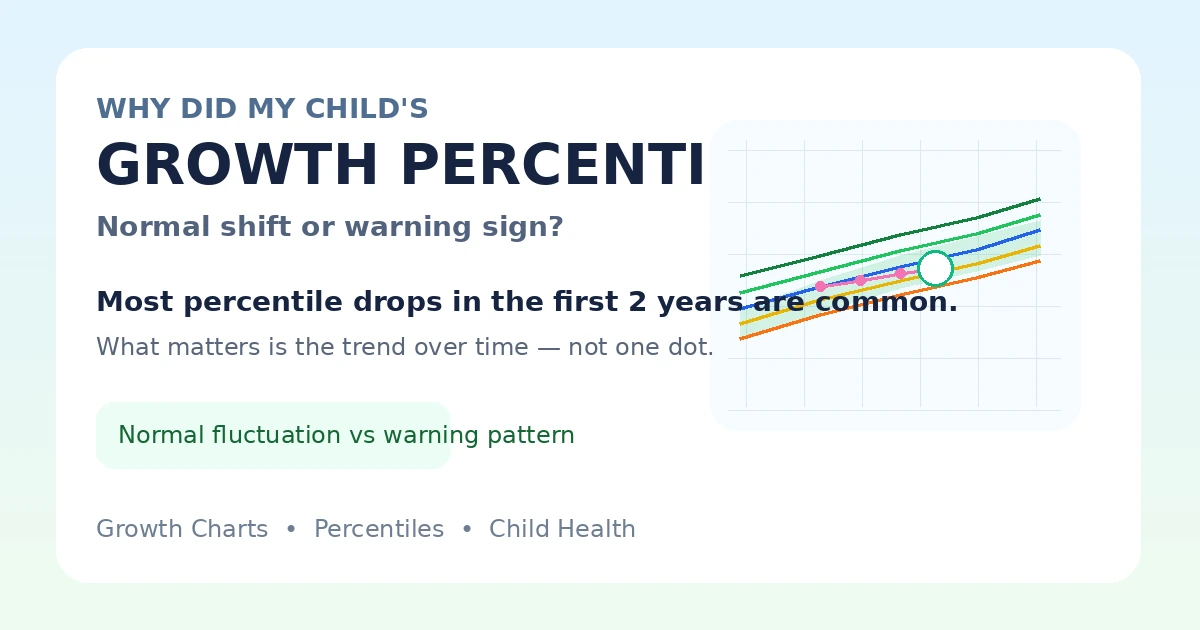
First, Take a Breath: Percentile Drops Are Common
The first thing most parents need to hear is this: a percentile drop is not automatically a sign that something is wrong. In infancy and toddlerhood, small shifts happen all the time. A baby percentile dropped reading can reflect normal biology, normal measurement noise, or a child settling into their own genetic pattern rather than a medical problem.
Percentiles are not grades, rankings, or health scores. They are just a way to describe where a child falls within a reference population. Pediatricians do not diagnose growth faltering from one dot alone. They look at trend, speed of change, feeding history, illness, family size, and the match between height and weight.
A quick reset
A child at the 40th percentile is not below average in a bad sense. It simply means 40% of children measure less and 60% measure more on that chart. Both can be completely normal.
That is why clinicians and the American Academy of Pediatrics emphasize repeated measurements over time, not a single data point. If your child dropped from one percentile band to the next once, that may be worth watching, but it is not the same thing as failure to thrive or true growth faltering.